DIY the dry, flat, forgiving surfaces: backsplashes, laundry floors, small powder rooms. Hire a professional for anything wet or structural — showers, tub surrounds, heated floors, and large-format floors — because those jobs hide waterproofing and substrate work where a mistake stays invisible until it ruins the framing.
We are a father-and-son tile company, so nobody here sneers at working with your own hands — it is the whole business. In 40 years around Riverside, Corona, and Moreno Valley, though, a steady share of our calls have started with the words "I watched some videos and got in over my head." The honest truth is that some tile jobs are genuinely good weekend projects, and others only look like they are. This post draws the line where we actually see it from the installer's side.
Which Tile Jobs Are Honest DIY Projects?
The pattern behind every good DIY tile job: a dry area, a small footprint, a flat and stable surface, and a tile size that forgives imperfect technique.
Kitchen backsplash
The classic starter project. It is vertical, it never gets soaked, and mosaic sheets or 3×6 subway tile hide small layout wobbles. The finish quality bar is high — a backsplash sits at eye level — but a careful amateur with a borrowed wet saw can absolutely get there. Budget a full weekend for what looks like an afternoon.
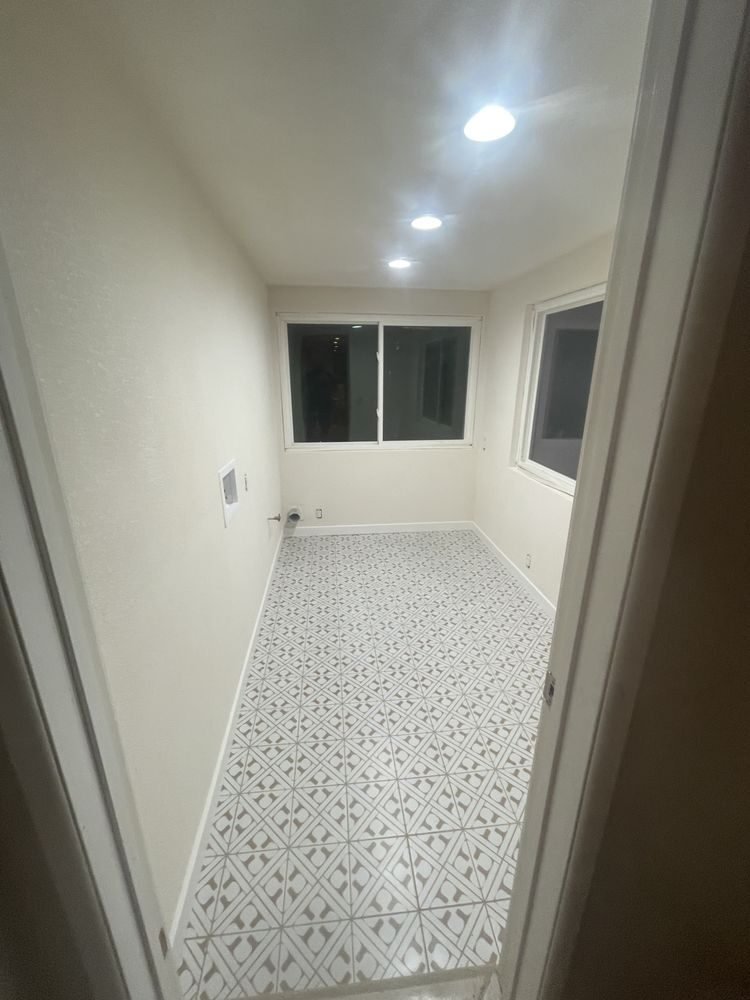
Laundry or mudroom floor
Small square footage, simple layout, and nobody scrutinizes the grout lines behind a washer. This is the right room to learn floor work: mixing thinset to the right consistency, back-buttering, checking your work with a straightedge.
Powder room floor
A half bath has no shower, so the waterproofing stakes are low. The challenge is all the cutting — around the toilet flange, the vanity, the door casing — which is fussy but not dangerous. If you can scribe and cut patiently, it is doable.

Where Do DIY Tile Jobs Usually Go Wrong?
Almost never at the step people practice for. DIYers worry about cutting tile; the jobs fail at everything that happens before a tile is cut.
- Skipped prep. Tile telegraphs everything beneath it. An unflattened floor or a flexing subfloor produces lippage now and cracked grout in a year. Pros spend a large share of any job on substrate work precisely because it is invisible later.
- Wrong trowel, poor coverage. Too little thinset under a tile leaves hollow voids that crack under a dropped pan. You cannot see coverage after setting — you have to know it was right when it went down.
- Layout decided on the fly. Starting in a corner and tiling toward the door is how you end up with a sliver cut at the room's most visible edge. A pro dry-lays and centers the field first.
- Grouting too early or sealing never. Thinset generally wants 24–48 hours before grout, and cement grout in wet areas needs sealing. Skipping either shortens the life of the whole installation — our grout cleaning and resealing guide covers what neglected grout looks like a few years in.
Which Tile Jobs Should Stay With a Pro?
Anything where water management or structure lives behind the tile.
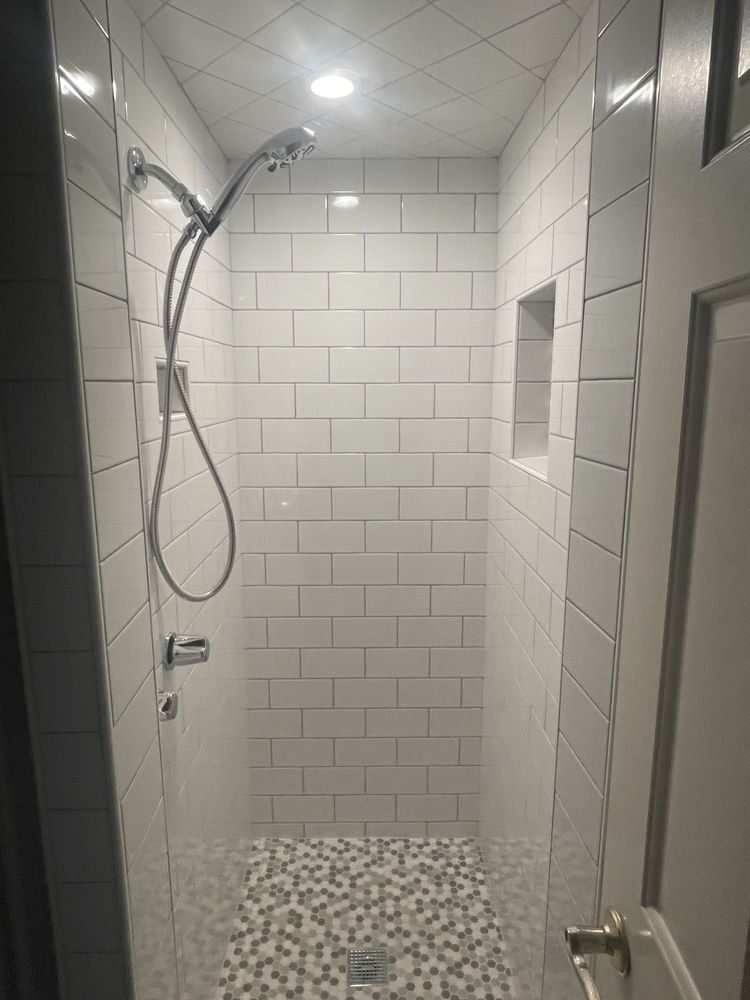
Showers and tub surrounds top the list, and it is not gatekeeping. A shower is a waterproofing system wearing tile as a face: sloped pan, bonded membrane or backer, sealed corners and niches, a drain assembly that ties into all of it. Get one layer wrong and the tile still looks perfect while water quietly soaks the studs. By the time anyone notices — a soft wall, a musty smell, a stain on the ceiling below — the repair involves framing, not just tile. Custom showers are our flagship shower tile service for exactly this reason, and what goes into one is a bigger subject than most homeowners expect; we walked through it in what drives the cost of a custom tile shower.
Large-format tile (planks and anything 12×24 or bigger) demands a floor flattened to tight tolerances and two sets of experienced hands — the leverage on a long plank turns a tiny hump in the floor into visible lippage. Heated floors add an electrical system you can kill with one trowel swipe. Natural stone varies piece to piece and punishes wrong setting materials with permanent staining. And anything structural — rot discovered mid-demo, a cracked slab, a shifting subfloor — has stopped being a tile project at all.
How Does DIY vs. Pro Break Down Task by Task?
| Job | DIY verdict | The hidden risk |
|---|---|---|
| Backsplash | Good first project | Visible layout errors at eye level |
| Laundry / mudroom floor | Good learner floor | Poor thinset coverage, hollow tiles |
| Powder room floor | Doable with patience | Fussy cuts around fixtures |
| Regrouting | Doable | Wrong grout type in wet areas |
| Large-format / plank floors | Borderline — lean pro | Lippage from unflattened substrate |
| Heated floors | Pro | One trowel nick kills the mat |
| Natural stone | Pro | Staining and breakage, no spare margin |
| Shower / tub surround | Pro — always | Invisible waterproofing failure into framing |
How Should You Decide on Your Project?
Ask three questions. Does water sit on or behind this surface? Does the substrate need correction before tile can go down? Would a failure be invisible until it becomes expensive? One yes means get a professional opinion before you start — not after. Which tile you choose matters too, and some materials are far more forgiving to set than others; our room-by-room guide to what tile belongs in each room is the right companion read before you buy anything.
And if you start a project and it turns on you, stop before grout. JM Custom Tile and Stone has finished plenty of half-done floors around Riverside without judgment — every member of our crew is a tile specialist, our work is guaranteed, and we leave the house cleaner than we found it. A free estimate on a floor or a full installation costs you nothing but a phone call.
DIY Tile Questions
Is tiling a backsplash a good first DIY tile project?
Yes — a backsplash is the best first tile project there is. The surface is vertical, dry, small, and forgiving, and mosaic sheets hide small layout errors. Rent or buy a small wet saw rather than relying on a snap cutter, take your time on the layout, and you can get a result you are proud of.
Why do pros say never to DIY a shower?
Because the part that fails is the part you cannot see. A shower is a waterproofing system with tile on top — pan slope, drain connection, membrane, and sealed corners all live behind the finished surface. A mistake stays invisible until water has been soaking the framing for months. Repairing that damage costs far more than the original professional installation would have.
What tools do I actually need to tile a floor?
At minimum: a wet saw, the correct notched trowel size for your tile, a level or straightedge, spacers or a leveling-clip system, a mixing paddle, and grout floats and sponges. The tool most DIYers skip is the straightedge for checking floor flatness — and floor prep is where most DIY tile jobs actually fail.
Can a pro fix a DIY tile job that went wrong?
Usually yes, but it almost always means starting over. Tile cannot be un-bonded and reset, so lippage, hollow spots, or a failed substrate mean demo and reinstallation. If you are mid-project and unsure, stopping and calling a professional before grouting saves more of the work than calling after.