Porcelain is the safe default for nearly every floor in the house — it shrugs off water, traffic, and dropped pans. Ceramic belongs on walls and backsplashes, natural stone where you want character and will maintain it, and small mosaics where grip matters, like shower floors.
Every room punishes tile in a different way. A bathroom attacks it with standing water, a kitchen with dropped cookware and grease, an entryway with grit ground in under shoes. After 40 years and more than 1,500 projects around Riverside, Corona, and Moreno Valley, our father-and-son crew has seen which choices hold up in each of those rooms — and which ones come back to haunt homeowners. Here is the room-by-room breakdown we walk clients through before any tile installation.
How Do You Decide What Tile Goes Where?
Three questions settle most tile decisions before style ever enters the conversation. First, how much water will the tile see — occasional splashes, daily puddles, or full immersion? Second, how much traffic and abuse — bare feet, boots, pets, rolling chairs? Third, how much maintenance are you honestly willing to do — because natural stone needs periodic sealing while porcelain needs almost nothing.
Material answers the first two questions. Porcelain is fired denser than ceramic, absorbs almost no water, and resists chips and scratches, which is why it dominates floors. Ceramic is lighter, easier to cut, and perfectly happy on walls where nothing steps on it. If you want the deeper comparison, we broke it down fully in porcelain vs. ceramic tile. Finish answers the third: matte and textured finishes hide wear and add grip, polished finishes show everything and get slick when wet.
What Tile Works Best in Bathrooms and Showers?
Bathrooms are the wettest rooms in the house, so porcelain leads here. On the main bathroom floor we like matte porcelain — large format if the room allows it — because it handles the daily splash zone around tubs and vanities without a second thought. Wall-rated ceramic works fine on wainscots and tub surrounds where nothing bears weight.
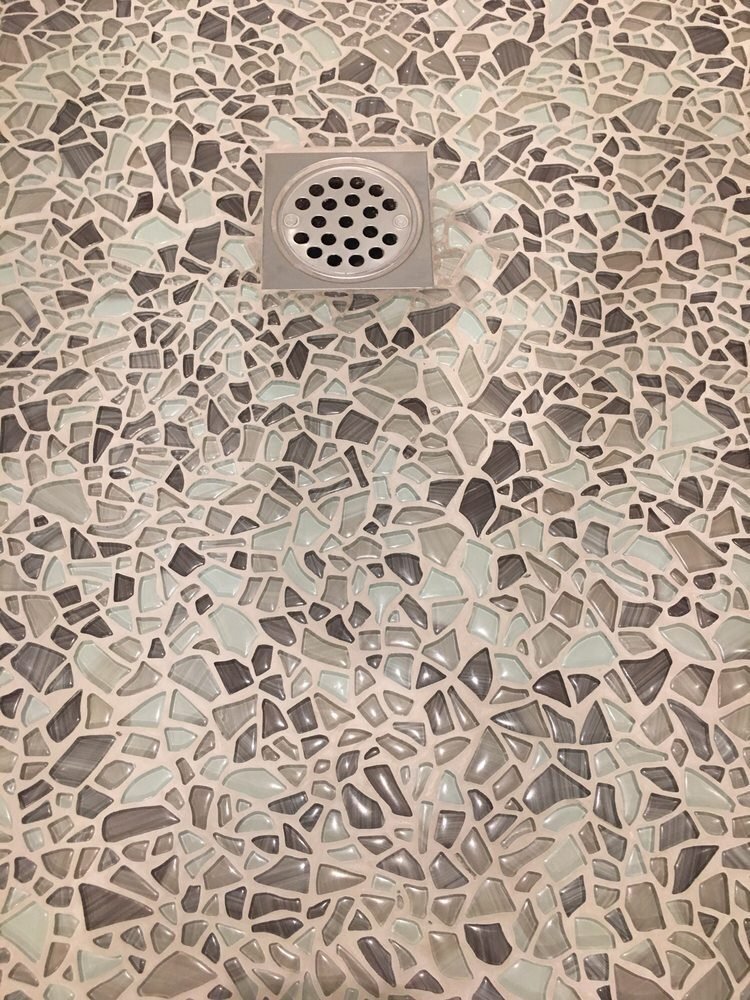
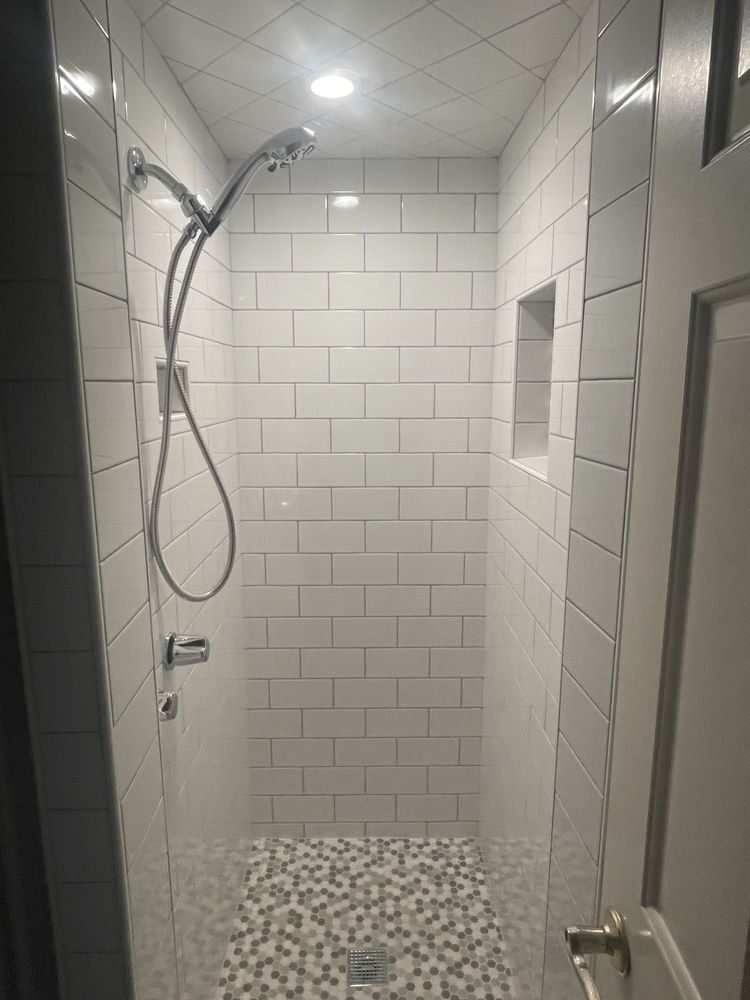
Showers play by their own rules. Walls can take large-format porcelain or classic subway ceramic, but the shower floor needs small tile — two-inch squares, hex mosaic, or pebbles — so the surface can slope to the drain and the extra grout joints can grip wet feet. Everything in a shower also depends on the waterproofing behind it, which is why custom shower tile is the one job we tell even handy homeowners not to attempt alone.

What Tile Should You Use in the Kitchen?
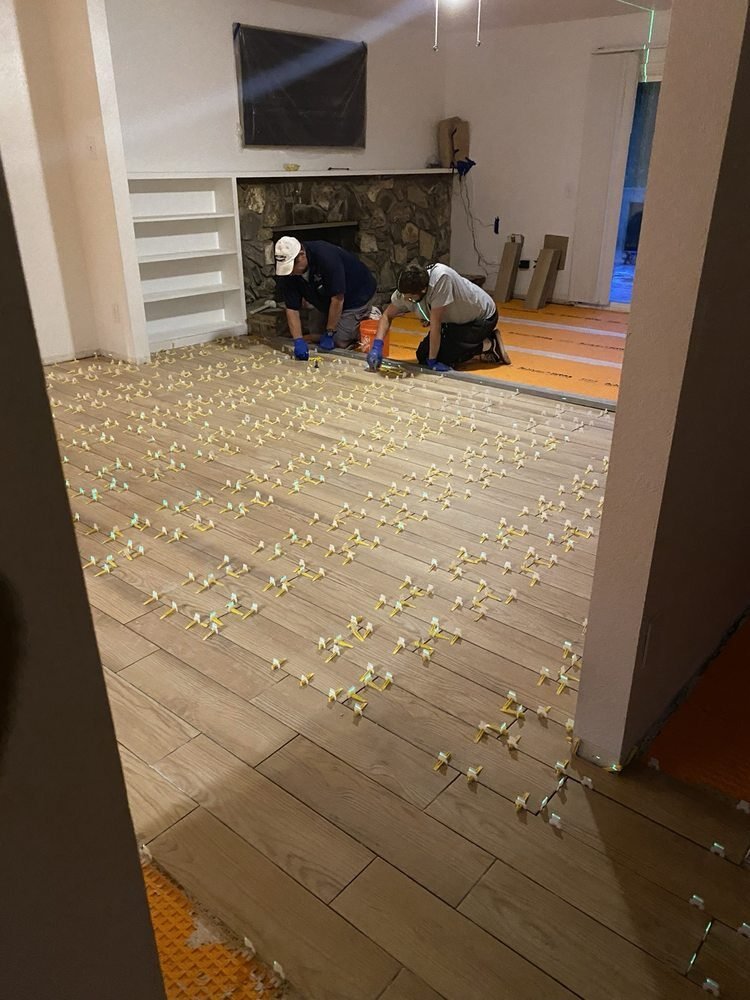
Kitchen floors take more abuse than any other tiled surface: cast iron dropped from counter height, chairs dragged across the same path a thousand times, grease and citrus that would etch a soft stone. Dense porcelain in a matte finish is the answer for the floor. Wood-look porcelain planks are especially popular in Inland Empire kitchens because they carry the warmth of hardwood into a room where real wood would cup and stain — we covered the honest trade-offs in our wood-look tile guide.
The backsplash is where you can finally have fun. Nothing steps on it, so glazed ceramic, glass mosaic, and handmade-look tile are all fair game. A kitchen backsplash is also the highest-visibility tile in the house — it sits at eye level behind the stove — so this is the place to spend on the tile you actually love. Just keep grout lines sealed near the cooktop, where grease finds its way into everything.
What Holds Up in Entryways and Living Areas?
Entryways are sandpaper stations. Every visitor grinds grit, moisture, and whatever the yard offers into the first six feet of floor. Textured porcelain with a through-body or color-matched glaze is the right call — chips stay invisible, and the texture hides the fine scratching that would dull a polished surface within a year.
In living areas and hallways, comfort and continuity matter more than water resistance. Large-format porcelain or plank tile run continuously from room to room makes a home feel bigger and eliminates awkward transitions. Riverside summers make tile floors a genuine comfort feature — they stay cool underfoot when it is 105 outside — and a properly installed tile floor will outlast any carpet or laminate you could put in the same space.

What About Laundry Rooms and Outdoor Spaces?
Laundry rooms are quiet flood risks — a failed washer hose can put an inch of water on the floor before anyone notices. Porcelain with tight, well-sealed grout joints buys you time and spares the subfloor. Because the room is small, remnant or closeout porcelain often covers it beautifully.
Outdoors, the rules tighten. Patio and pool-deck tile must be frost-tolerant, slip-rated for wet use, and light enough in color not to scorch bare feet in August. Dense exterior-rated porcelain and certain natural stones qualify; interior glazed ceramic does not. Salvaged interior tile on a patio is one of the most common failures we get called to replace.
Which Tile Goes in Which Room? A Quick Reference
| Room | First choice | Also works | Skip |
|---|---|---|---|
| Bathroom floor | Matte porcelain | Textured stone (sealed) | Polished finishes |
| Shower walls | Porcelain, large format | Ceramic subway | Unsealed natural stone |
| Shower floor | Mosaic or pebble | 2″ porcelain squares | Anything large or polished |
| Kitchen floor | Matte porcelain | Wood-look plank tile | Soft stone (marble, limestone) |
| Backsplash | Glazed ceramic | Glass or stone mosaic | Rough, hard-to-wipe textures |
| Entryway | Textured porcelain | Slate, patterned porcelain | Polished porcelain |
| Living areas | Large-format porcelain | Plank tile | Wall-rated ceramic |
| Patio / outdoors | Exterior-rated porcelain | Slip-rated stone | Interior glazed tile |
The short version: matte porcelain on every floor, ceramic and mosaics on the walls, small tile in the shower pan, and exterior-rated material outside. Break those rules for looks only where water and traffic can't punish you for it.
Want a Second Opinion Before You Buy?
Tile is one of the few finishes you buy once and live with for decades, and the right answer shifts with your home's layout, subfloor, and how your family actually uses each room. JM Custom Tile and Stone is a licensed California contractor (CSLB #649040, C-54), every member of our team is a tile specialist, and all our work is guaranteed. If you are weighing options for a bathroom, kitchen, or whole-house floor anywhere in Riverside, Corona, or Moreno Valley, we are happy to look at your rooms and tell you exactly what we would put in each one — the estimate is free.
Room-by-Room Tile Questions
Can I use the same tile in every room of the house?
You can, and many homeowners do — a single porcelain plank or large-format tile run through the main living areas makes a home feel larger and keeps cleaning simple. The exceptions are shower floors, which need small mosaic tile for slope and slip resistance, and outdoor areas, which need a slip-rated finish.
Is polished tile a bad idea for floors?
Polished porcelain is beautiful but slick when wet, so we steer clients away from it in bathrooms, entryways, and kitchens. A matte or textured finish gives you traction where water and spills happen. Polished finishes are better saved for walls, backsplashes, and low-traffic areas.
Do I need different tile for walls versus floors?
Floor tile can almost always go on a wall, but wall tile cannot always go on a floor. Wall-rated ceramic is thinner and softer and will crack or wear under foot traffic. Check the tile's rating before putting a wall tile on the ground — or ask your installer to check it for you.
What size tile should I choose for a small room?
Large-format tile actually helps small rooms feel bigger because there are fewer grout lines interrupting the floor. The old advice to use small tile in small rooms is outdated. The one place small tile still wins is on shower floors, where the extra grout joints provide grip and let the floor slope to the drain.