The short answer: porcelain is denser, absorbs less than 0.5% water, and stands up to heavy traffic and wet rooms; ceramic is easier to cut and generally costs less, which makes it a smart pick for walls and backsplashes. For floors and showers, porcelain is usually the safer long-term choice.
Walk any tile aisle in Riverside and the porcelain and ceramic sections look interchangeable — same colors, same sizes, similar glazes. The difference is not in how they look on the shelf. It is in how they behave after five years of foot traffic, mopping, and the occasional dropped pan. After 40 years and more than 1,500 projects, JM Custom Tile and Stone has pulled up plenty of both, and the pattern is consistent: the right material for the surface outlasts the wrong one by decades.
What Actually Makes Porcelain Different From Ceramic?
Both tiles start as clay. Porcelain is pressed from a finer, denser clay body and fired at higher temperatures, which fuses the material until it is nearly glass-like. That firing is what drives the number that matters most on a spec sheet: water absorption. To be sold as porcelain, a tile must absorb 0.5% or less of its weight in water. Standard ceramic can absorb several times that.
Low absorption is not just a wet-room statistic. A denser body resists chips, point impacts, and surface wear, and it will not flake apart if it ever freezes with moisture inside it — which is why porcelain is the only one of the two we will set on an outdoor patio, even in our mild Inland Empire winters.
How Do Porcelain and Ceramic Compare Spec for Spec?
Here is the side-by-side we walk clients through at the showroom stage. None of these rows makes one tile "better" — they tell you which surface each one belongs on.
| Spec | Porcelain | Ceramic |
|---|---|---|
| Water absorption | 0.5% or less | Higher — often 3% and up |
| Density & impact resistance | Very high | Moderate |
| Typical PEI wear class | 4–5 (heavy traffic) | 1–3 (walls to light floors) |
| Outdoor / freeze use | Yes | Not recommended |
| Cutting & drilling | Harder — diamond blade work | Easier, faster to work |
| Relative cost | Generally higher | Generally lower |
| Best at | Floors, showers, entries, patios | Walls, backsplashes, low-traffic rooms |
PEI ratings grade a glaze's wear resistance from 1 (wall only) to 5 (heavy commercial traffic). A PEI 3 tile is fine in a guest bath; it is the wrong choice for the hallway your kids and dogs run every day.

When Is Porcelain Worth the Extra Cost?
Any surface that lives a hard life. In the homes we tile across Riverside, Corona, and Moreno Valley, that means:
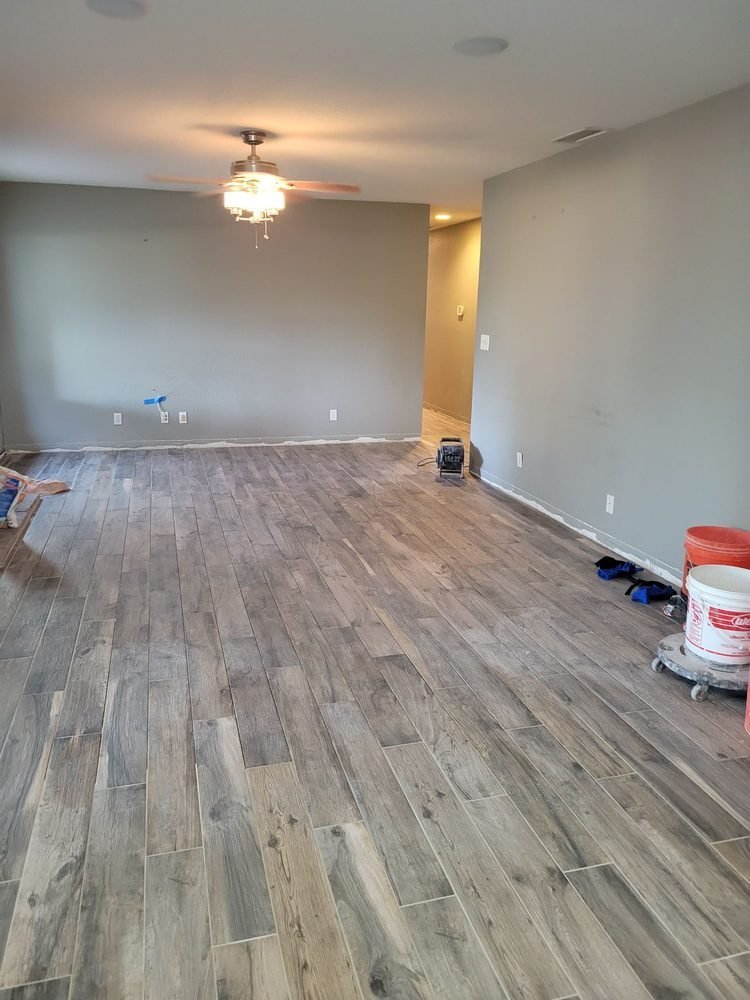
- Kitchen and main-living floors. Chairs drag, pans drop, and dirt tracked in from dry Inland Empire summers acts like sandpaper underfoot. A dense PEI 4+ porcelain shrugs all of it off — it is the default for our floor tile installations.
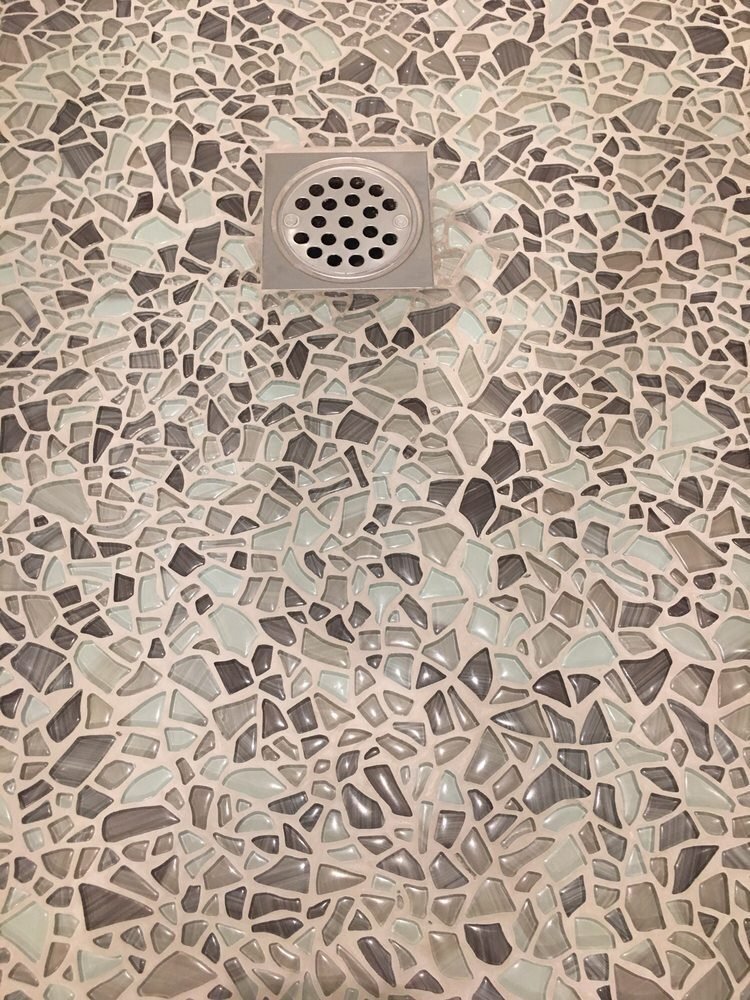
- Showers and tub surrounds. A shower floor sits in water every day. Porcelain's near-zero absorption is why it anchors nearly every custom shower we build.
- Entryways and mudrooms. Grit, sun, and constant traffic — the same argument as the kitchen, doubled.
- Anything outdoors. Patios, front porches, pool surrounds. Ceramic outdoors eventually spalls; porcelain does not care.
Porcelain is also what nearly all wood-look plank tile is made from — if that style is on your shortlist, our guide to the pros and cons of wood-look tile flooring covers it in depth.
Where Does Ceramic Still Make Sense?
Plenty of places. Ceramic's lighter body and easier cutting are genuine advantages, not consolation prizes:
- Backsplashes. A kitchen backsplash sees splashes and steam, never standing water or foot traffic. Ceramic offers some of the best glaze colors and hand-made looks in the business, which is why it shows up so often in our backsplash work.
- Bathroom and shower walls. With modern waterproofing membranes behind the tile, the wall tile itself is decorative armor — ceramic handles it well.
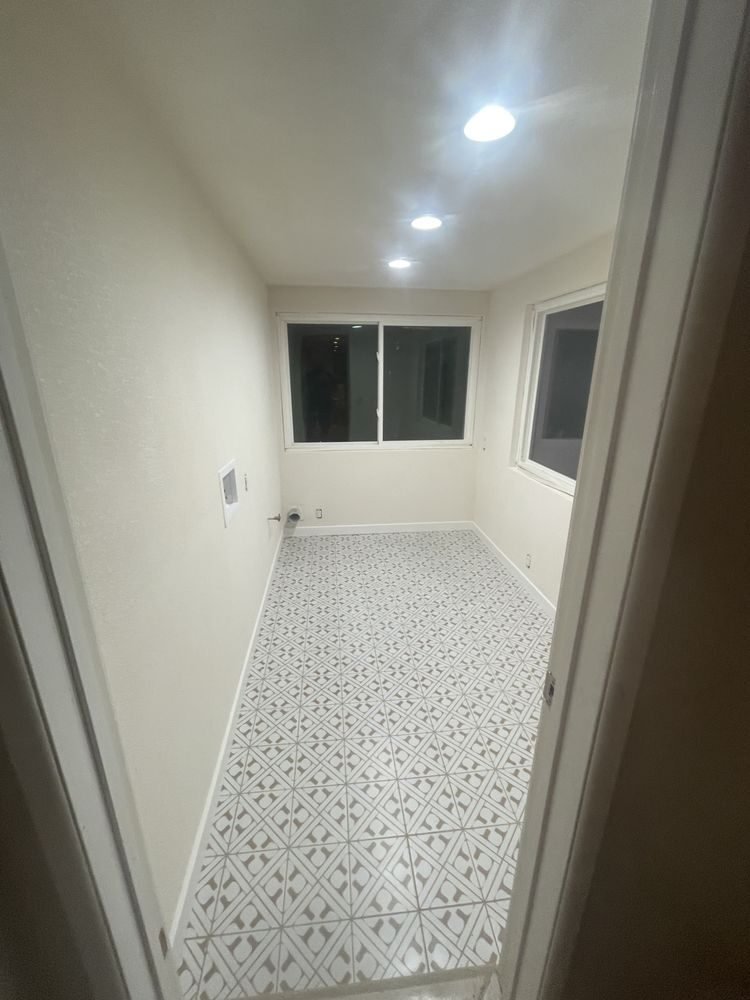
- Low-traffic floors. A guest bath or laundry room floor does not need commercial-grade wear resistance.
- Detail and accent work. Softer bodies cut cleanly into niches, borders, and intricate patterns with less waste.
Which Rooms Favor Which Tile?
Our rule of thumb after four decades: floors and wet zones lean porcelain, walls and accents lean ceramic. A kitchen might use both on the same day — porcelain planks underfoot, glazed ceramic on the splash. A master bath often runs porcelain on the floor and shower pan with ceramic field tile up the walls. For a full room-by-room walkthrough, see our guide to what tile to use in each room, or start with the basics in how to choose the right tile for your project.

Does Installation Change Between the Two?
Yes — and it is where a lot of DIY projects run aground. Porcelain's hardness means every cut takes a quality wet saw with a fresh diamond blade; score-and-snap cutters that breeze through ceramic will wander or shatter a porcelain edge. Dense porcelain also bonds properly only with the right polymer-modified thinset, and large-format porcelain planks demand a flat substrate and back-buttering to avoid hollow spots and lippage.
Every member of our father-and-son team is a tile specialist, all work is guaranteed, and we leave the house cleaner than we found it. If you would rather not learn porcelain's habits on your own floor, our tile installation service covers material selection through final grout seal.
Porcelain vs. Ceramic: Common Questions
Is porcelain tile always better than ceramic?
No. Porcelain is the stronger material, but ceramic is easier to cut, lighter on walls, and comes in a huge range of glazes. For a backsplash or a wall that never sees standing water, ceramic performs beautifully. Porcelain earns its premium on floors, in showers, and anywhere durability is the priority.
Can I use ceramic tile in a shower?
Ceramic works well on shower walls as long as the waterproofing behind it is done correctly — the membrane keeps the water out, not the tile. For shower floors we recommend porcelain or a porcelain mosaic, because the floor takes standing water, daily traffic, and cleaning chemicals all at once.
How can I tell porcelain from ceramic at the store?
Check the spec sheet, not the shelf tag. True porcelain has a water absorption rate of 0.5 percent or less, and many boxes carry a porcelain certification mark. If the listing only says "ceramic" with no absorption figure, assume it is standard ceramic and keep it off wet floors and outdoor areas.
Do porcelain or ceramic tiles need to be sealed?
Glazed porcelain and glazed ceramic do not need sealing — the glaze is the seal. Cement grout between the tiles does need sealing, and unglazed or polished porcelain can benefit from it. That is why grout care, not tile care, drives most maintenance on a tiled floor.