The short answer: wood-look tile gives you hardwood grain in a porcelain plank that shrugs off water, scratches, and pets. The trade-offs are real — it is harder and colder underfoot than wood, and a careless install shows every flaw. For most busy Inland Empire households, the durability wins.
Wood-look plank tile has been the most requested floor in our showroom conversations for years running, and not because it is trendy. In Riverside, Corona, and Moreno Valley homes, it solves a specific set of problems — water, dogs, sun, and hundred-degree summers — that punish real hardwood. JM Custom Tile and Stone has set thousands of square feet of it across more than 1,500 projects, so here is the honest ledger: what it does brilliantly, and what the showroom sample will not tell you.
What Is Wood-Look Tile, Exactly?
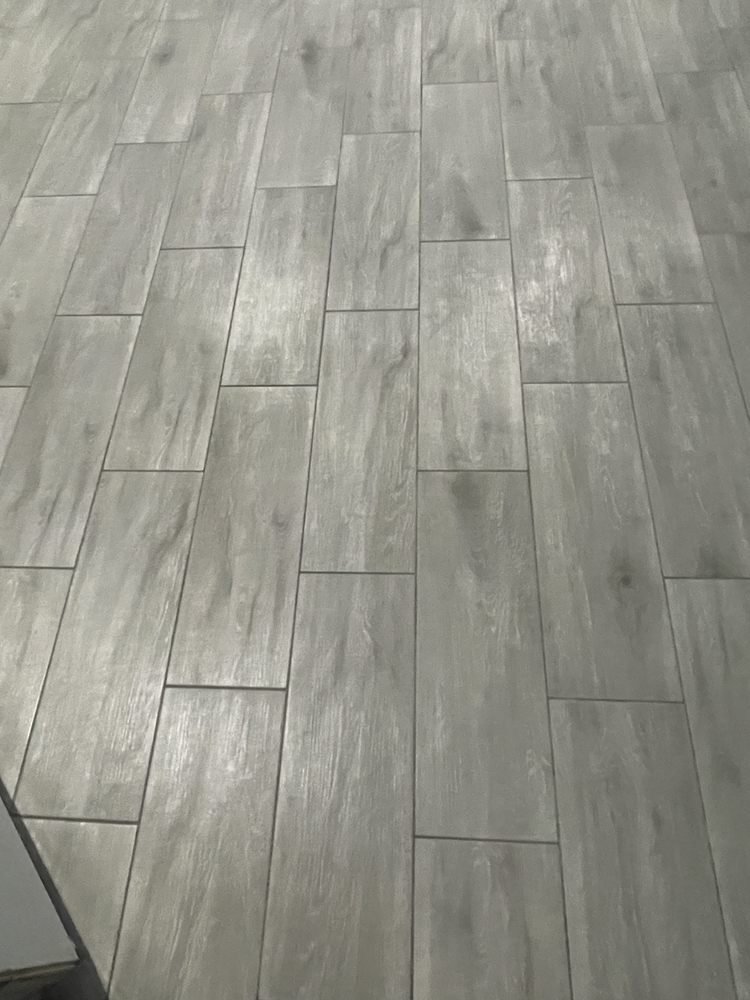
Wood-look tile is porcelain (occasionally ceramic) formed into long plank shapes — commonly 6×24, 8×40, or longer — with a photographic wood grain fired into the glaze. Because nearly all of it is porcelain, it inherits porcelain's spec sheet: water absorption under 0.5%, high density, and wear ratings built for heavy traffic. If those numbers are new to you, our porcelain vs. ceramic comparison explains what they mean in practice.
Quality varies enormously between lines, though. The details that separate convincing from cartoonish: how many unique grain "faces" print across a box, whether the surface has real texture or a flat gloss, and whether the edges are rectified (precisely ground) so grout joints can shrink to almost nothing.
Why Do Inland Empire Homeowners Keep Choosing It?
Where It Shines
- Waterproof enough for kitchens, baths, and laundry rooms
- Ignores dog claws, chair legs, and dropped toys
- Never needs sanding, refinishing, or recoating
- Holds its color in our intense inland sunlight
- Stays cool underfoot through triple-digit summers
- One floor can run wall-to-wall, wet rooms included
The Trade-Offs
- Hard underfoot — dropped glassware rarely survives
- Cold on winter mornings without rugs or radiant heat
- Grout lines exist and need occasional care
- Long planks demand a flat slab and a careful setter
- No refinishing — changing the look means demo
- Repairs require spare planks from the original dye lot
The through-line on the pros: this is a floor you stop thinking about. Real hardwood in a busy household is a maintenance relationship — humidity swings, refinishing cycles, panic over standing water. Porcelain planks end that relationship. That is why they anchor so many of our floor tile installations, and why they run straight through kitchens and into bathrooms without a transition strip.

What Are the Honest Downsides?
The cons deserve more than a bullet list, because they are the calls we get from people who bought the tile before they understood it.
It is genuinely hard. Porcelain does not flex. Standing at a kitchen counter for an hour feels different than it does on wood, and anything fragile that hits the floor loses. Cushioned mats at work zones solve most of it, but if barefoot softness is your top priority, tile is the wrong answer.
The grout is part of the floor. Tight, color-matched joints nearly disappear visually, but they are still cement grout that wants sealing and occasional cleaning. Done right it is minor upkeep — our guide on cleaning tile grout and knowing when to reseal covers the whole routine.
The install is unforgiving. Long planks telegraph every hump in a slab. This is the single biggest quality gap between a floor that looks like hardwood and one that looks like a tile aisle — more on that below.
How Does It Stack Up Against Hardwood and Vinyl Plank?
| Factor | Wood-Look Porcelain | Solid Hardwood | Luxury Vinyl Plank |
|---|---|---|---|
| Water resistance | Excellent — wet rooms fine | Poor — cupping risk | Very good |
| Scratch & pet resistance | Excellent | Fair — shows wear | Good — can gouge |
| Feel underfoot | Hard, cool | Warm, slight give | Softer, warmer |
| Sun fade (inland exposure) | Fired-in color — negligible | Noticeable over time | Can fade and soften |
| Renewability | Replace planks as needed | Sand & refinish repeatedly | Replace planks / full floor |
| Typical service life | Decades, install-dependent | Generations, with upkeep | Shorter than either |
What Makes a Plank Tile Floor Look Right?
Almost every "I regret my wood-look tile" story traces back to installation, not material. Three details decide the outcome:
- Offset. Plank tile is slightly crowned in the center from firing. Stagger joints at 50% like hardwood and every high center sits beside a neighbor's low end — you feel the ridges barefoot. The standard is a 25–33% offset, which keeps crowns away from edges.
- Flatness. Long planks need the slab ground or leveled first. We run leveling clips on virtually every plank job; they hold neighboring edges flush while the thinset cures.
- Grout choice. A joint within a shade or two of the tile body makes the floor read as wood. A contrasting joint turns it back into tile from across the room.

Patterns raise the stakes further — herringbone and chevron layouts double the cuts and the lippage risk, and they are where a professional tile installation earns its keep. Not sure whether your project is a DIY candidate? Our breakdown of which tile work you can DIY draws the line honestly. Every JM Custom Tile and Stone crew member is a tile specialist, the work is guaranteed, and we leave the house cleaner than we found it.
Wood-Look Tile: Common Questions
Does wood-look tile actually look like real wood?
Modern planks are much more convincing than the first generation. High-definition printing puts dozens of unique grain patterns in a single box, and rectified edges allow tight grout joints in a matching color. From standing height, most visitors will not clock a well-installed floor as tile — the giveaways are repeated planks and badly matched grout, both of which good installation avoids.
Can wood-look tile go in a shower?
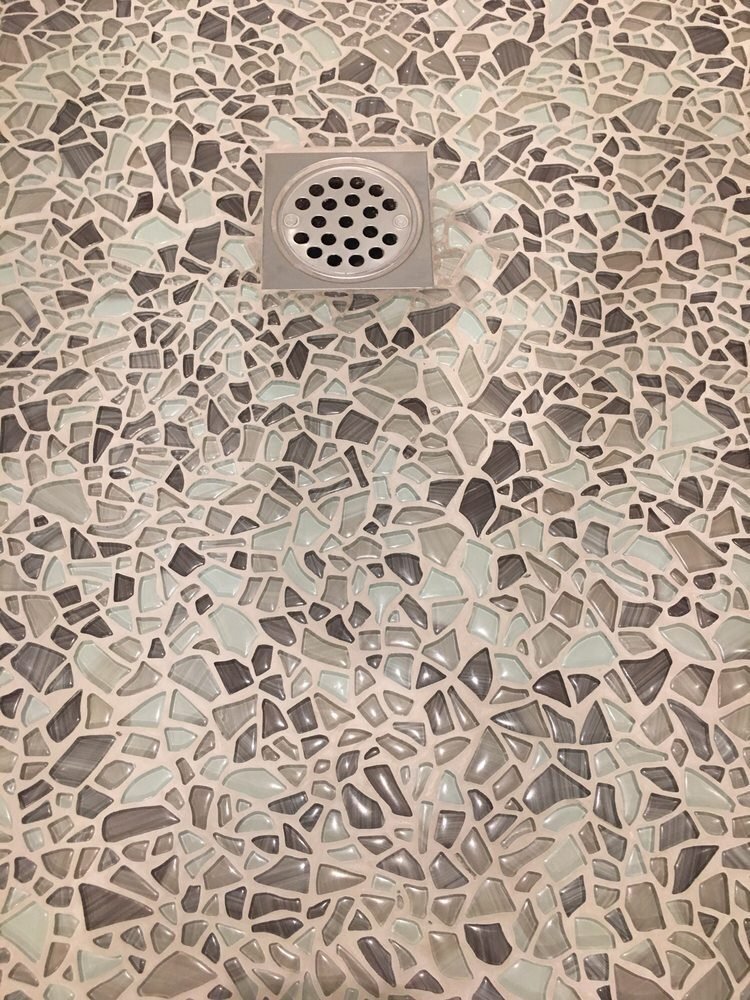
On shower walls, yes — planks run vertically or horizontally make a striking feature wall. On shower floors we steer clients away from full planks: a shower pan needs to slope to the drain from every direction, and long rigid planks cannot follow that compound slope. A small-format mosaic on the pan with planks on the walls gives you the look without the puddles.
Is wood-look tile colder than real hardwood?
Yes. Porcelain has more thermal mass, so it holds the temperature of the slab beneath it — noticeably cool on winter mornings and pleasantly cool through an Inland Empire summer. Area rugs handle the winter side, and the tile pairs beautifully with radiant floor heating if it is in the budget.
What happens if a plank cracks or chips?
Individual planks can be cut out and replaced without disturbing the rest of the floor, which is a repair hardwood cannot match without refinishing the room. The catch is matching the dye lot — we always tell clients to keep at least one spare box from the original order in the garage.